
An intelligent hardware and software complex was developed to enhance road safety and automate pedestrian crossing control. The solution combines computer vision, video analytics, edge AI, and a centralized urban infrastructure monitoring system.
The system is designed to automatically detect pedestrians in the crossing zone, warn drivers of potentially hazardous situations, and collect real-time usage statistics.
System Workflow
The solution is powered by an edge-based AI computer vision module. The system analyzes video streams from cameras in real time, defines crosswalk boundaries, tracks pedestrian movement, and predicts the intent to cross the road.
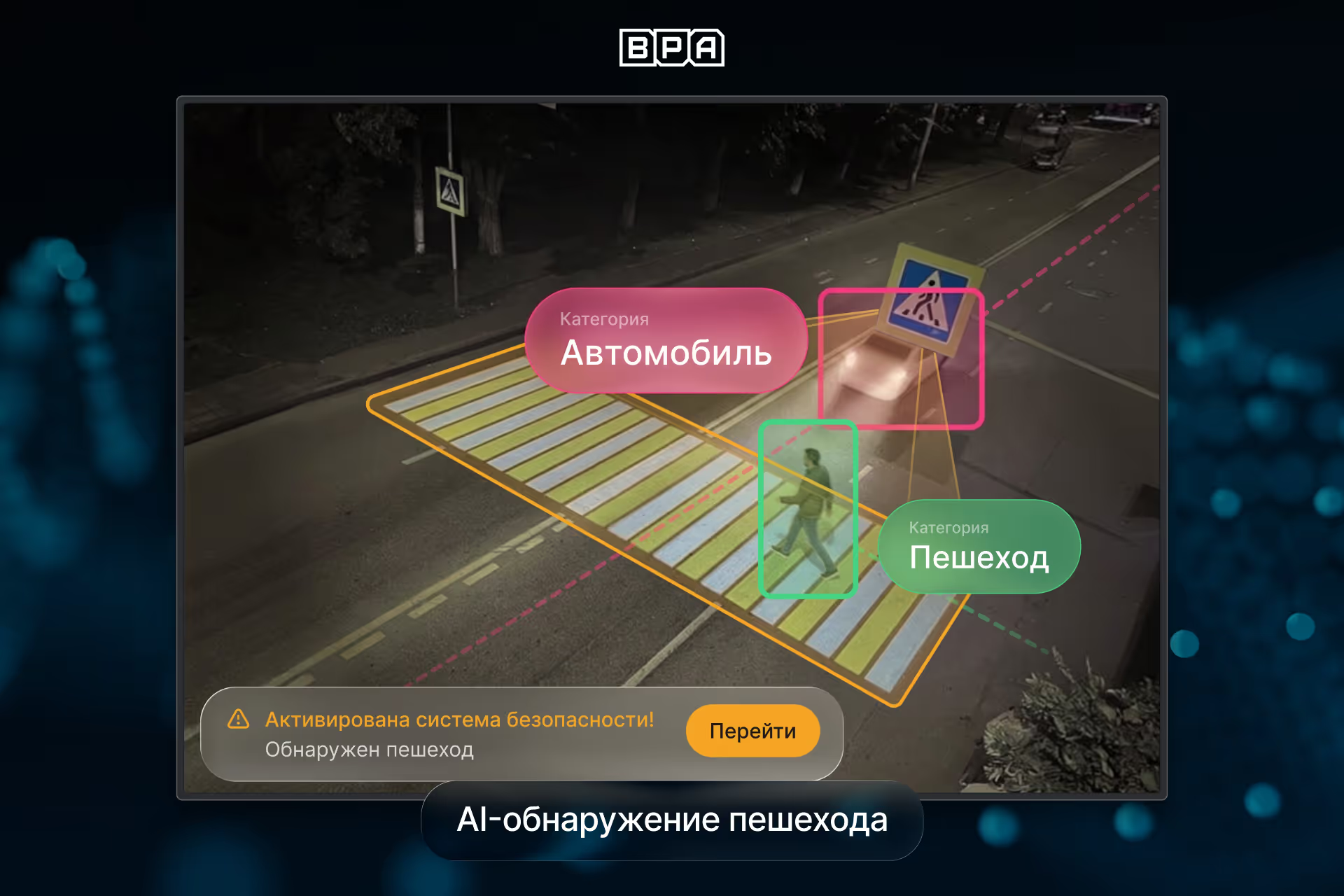
When a pedestrian is detected, the system automatically triggers a visual alert sequence. Bright, dynamic markings are projected onto the road surface, road sign illumination is activated, and warning messages are displayed for drivers.
Once the crossing is clear, all elements automatically deactivate, ensuring drivers are alerted only when a potential risk exists and avoiding unnecessary visual clutter.
Integration with ITS and Traffic Signal Control
For signalized pedestrian crossings, an additional software module was developed to integrate with traffic signal controllers and Intelligent Transportation Systems (ITS).
The solution allows for real-time analysis of the number of people waiting to cross, enabling dynamic adjustments to traffic signal timing. When a large group of pedestrians gathers, the system can automatically extend the "walk" signal, ensuring a safer and more comfortable crossing experience.
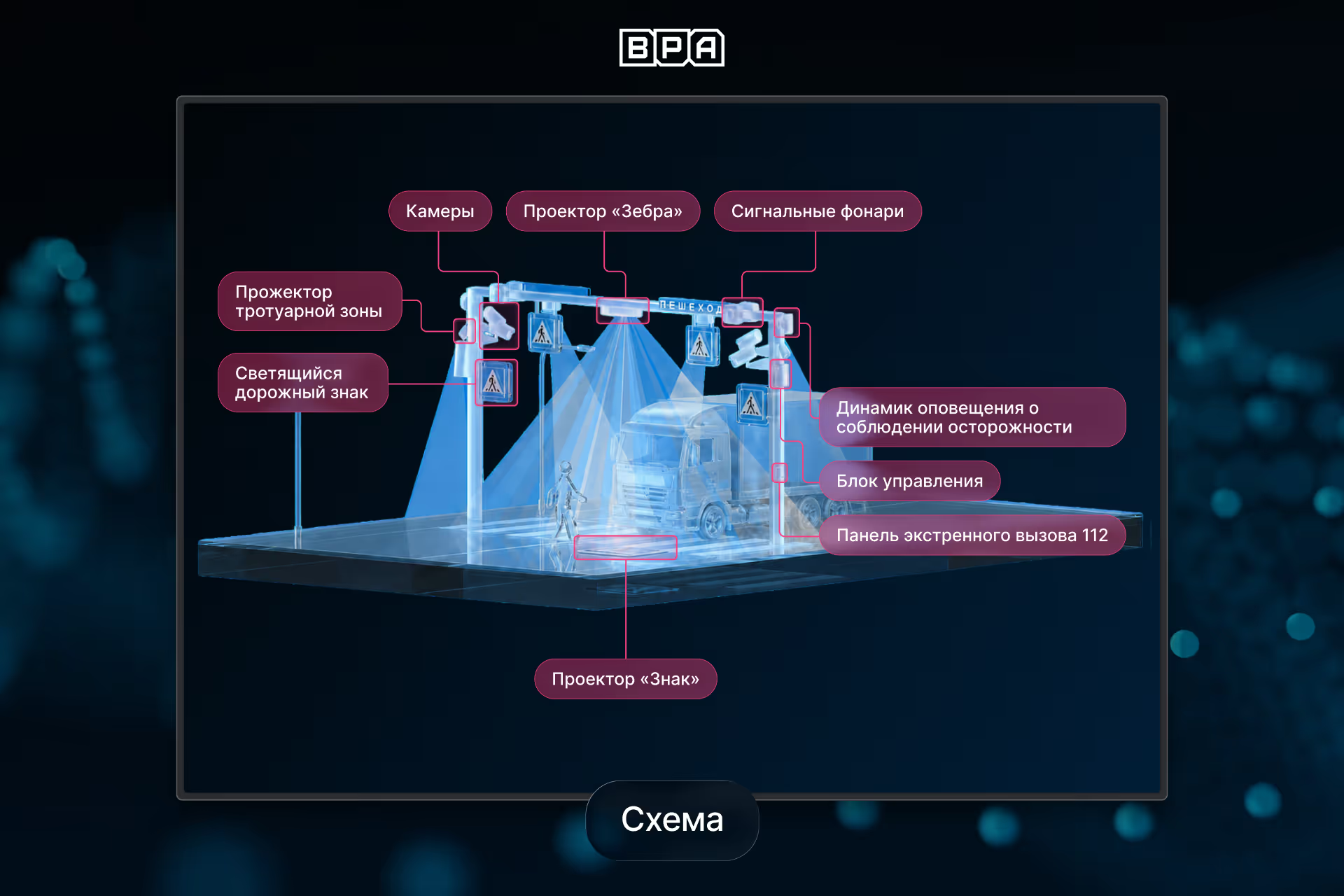
This approach allows traffic signals to adapt to actual road conditions, reduces crowding at crossings, and improves urban infrastructure throughput without requiring changes to existing traffic management algorithms.
Additionally, the system detects instances of pedestrians crossing against a red light. The video analytics automatically record the violation, create an event log, and transmit the data to the monitoring center for further analysis. This provides objective statistics on hazardous urban locations, identifies crossings with high violation rates, and informs decisions regarding upgrades or traffic flow modifications.
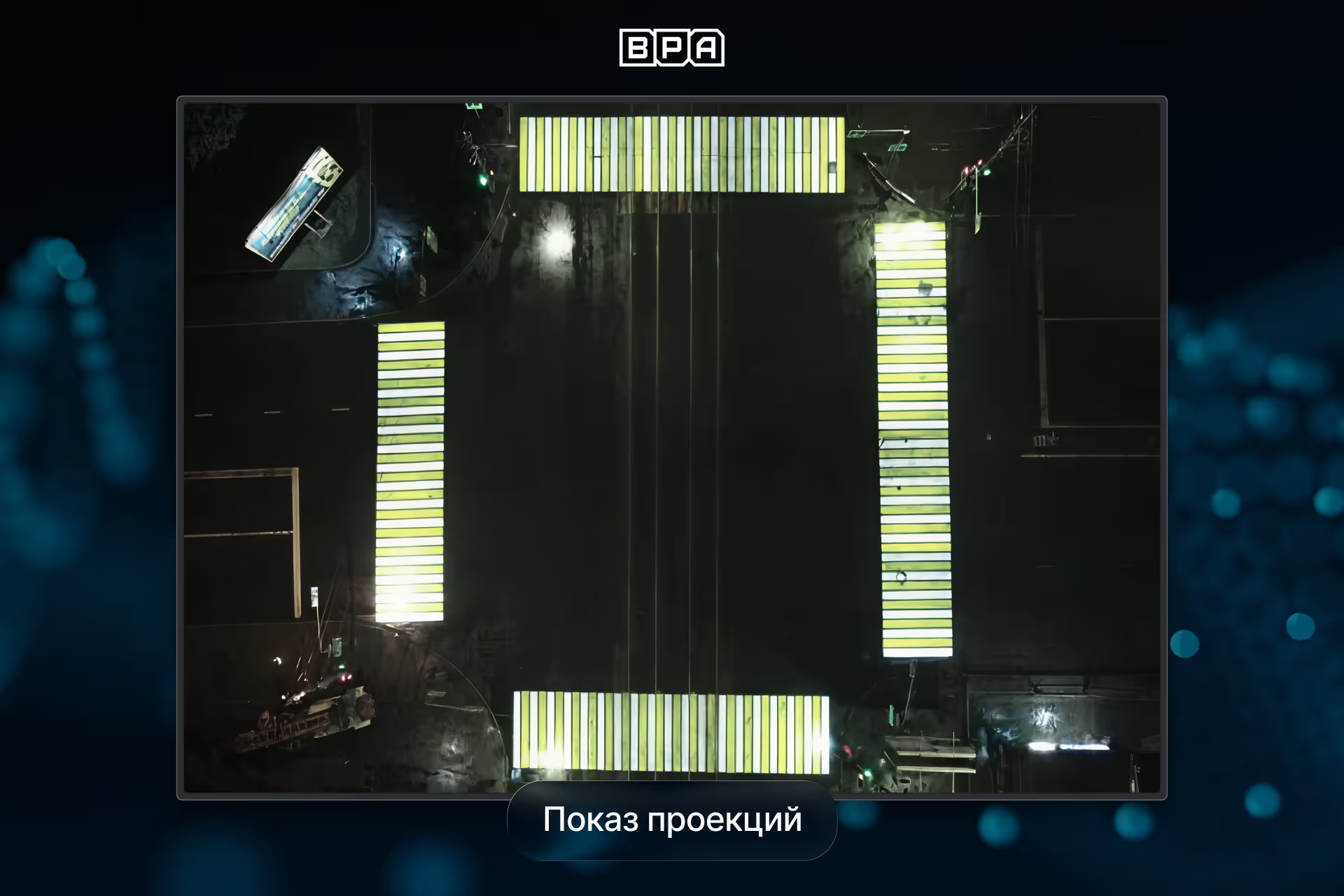
All data regarding site operations, pedestrian traffic volume, violations, and signal timing can be transmitted to the ITS and used as part of a unified urban transport infrastructure management network.
Centralized Management System
A unified monitoring and management platform was also developed. All data from the smart crosswalks is sent to a dispatch center, where operators can monitor equipment status, view statistics, analyze pedestrian traffic volume, and track events in real time.

The system allows for assessing the traffic load of individual crossings, identifying the most heavily used parts of urban infrastructure, and making decisions based on objective data rather than expert estimates.